Conversion Systems
Conversion isn’t a campaign. It’s a system.
Growth and customer loyalty. That’s what every brand wants.
This case study demonstrates how I designed conversion messaging across the customer journey — from entry points to lifecycle flows to promotional moments — aligning headlines, subject lines, CTAs, and retention mechanics into one coordinated growth engine.
Lifecycle
Full-funnel email architecture designed to drive conversion, increase AOV, and protect long-term brand equity.
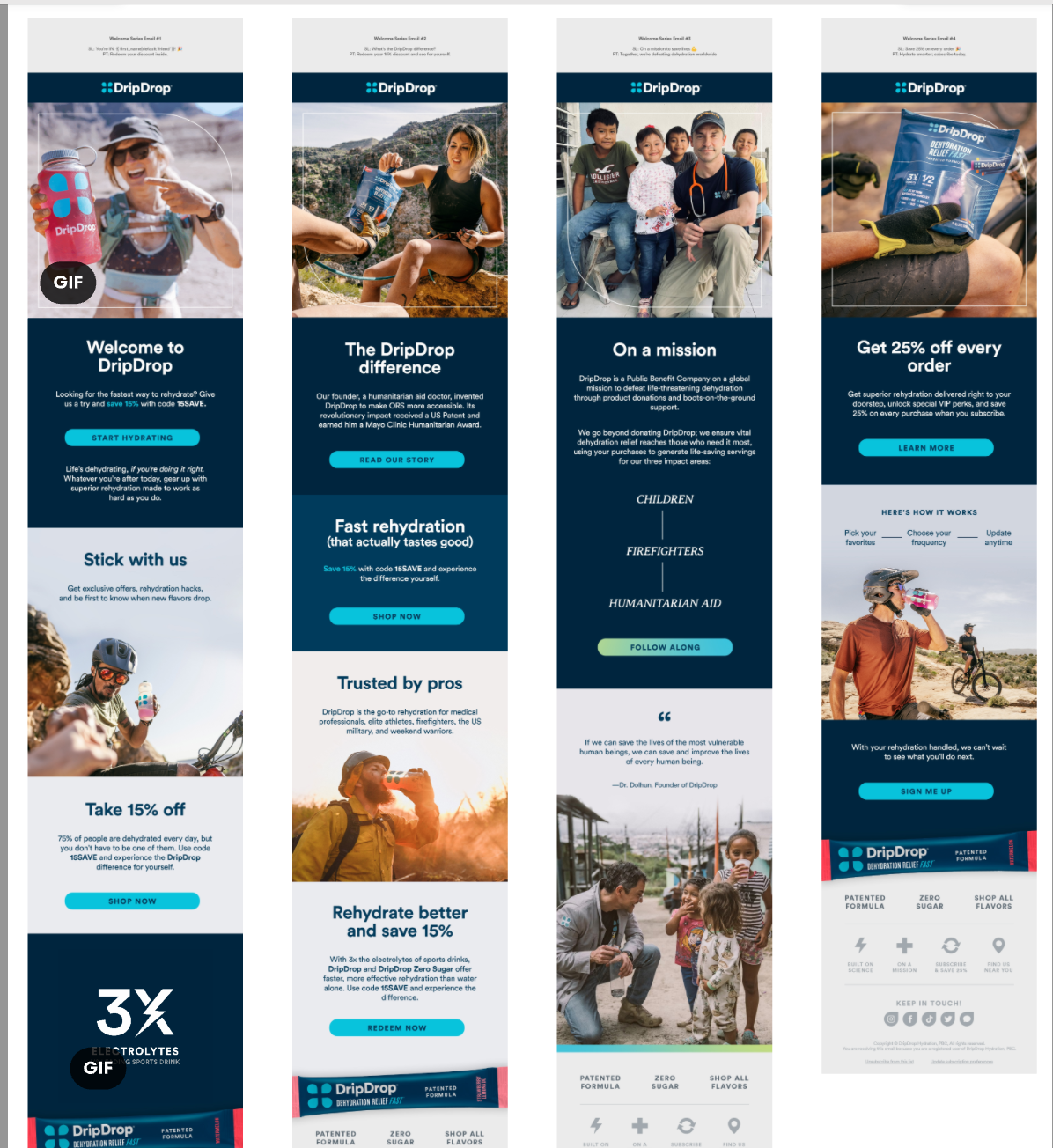
Welcome Series
Lifecycle Stage: Onboarding & Education
Goal: Convert new subscribers into first-time purchasers while establishing efficacy and mission credibility.
Sequencing Logic:
Immediate product efficacy + introductory offer
Founder credibility + scientific differentiation
Mission + impact reinforcement
Subscription education + savings framing
Social proof + usage integration
Behavioral nudges toward bundle or subscribe
(4 of 14 emails shown below.)
Subscribe & Save
Lifecycle Stage: Retention & LTV Expansion
Goal: Increase subscription enrollment without over-relying on urgency or flash discounting.
Approach:
Tested two subscription positioning strategies:
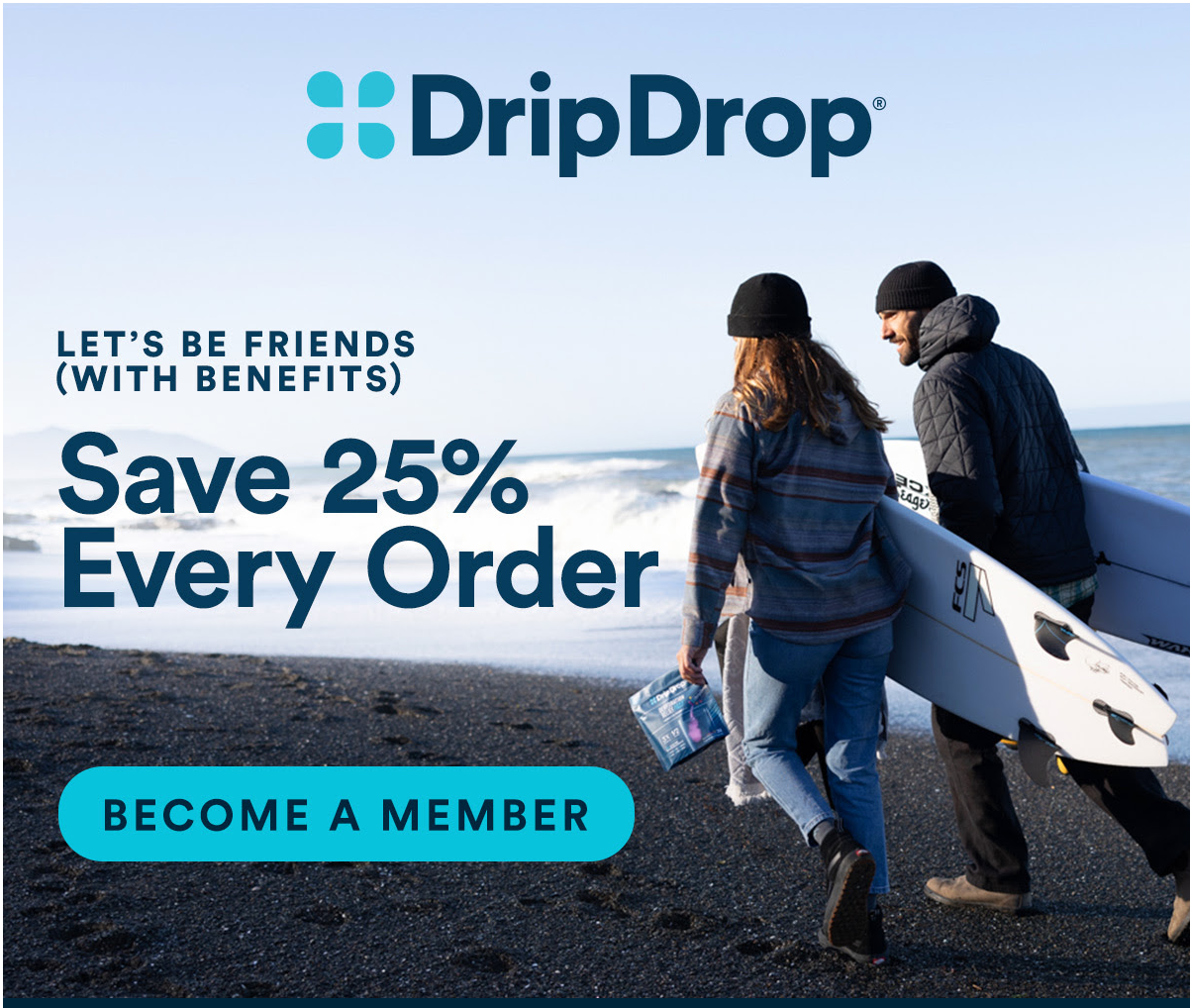
Savings-led framing: “Get 25% off every order” (VIP value anchor)
Utility-led framing: “Dehydration relief on your doorstep” (problem-first education)
Balanced immediate conversion pressure with long-term behavioral adoption.
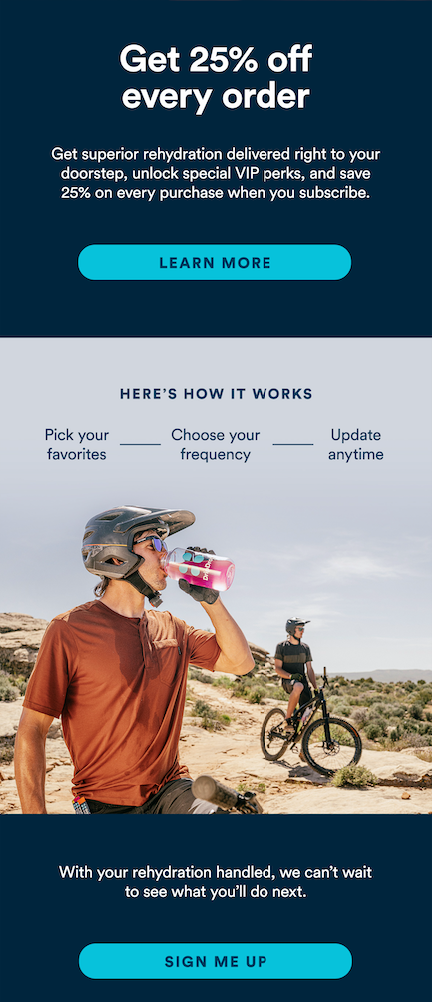
Savings-first subscription framing
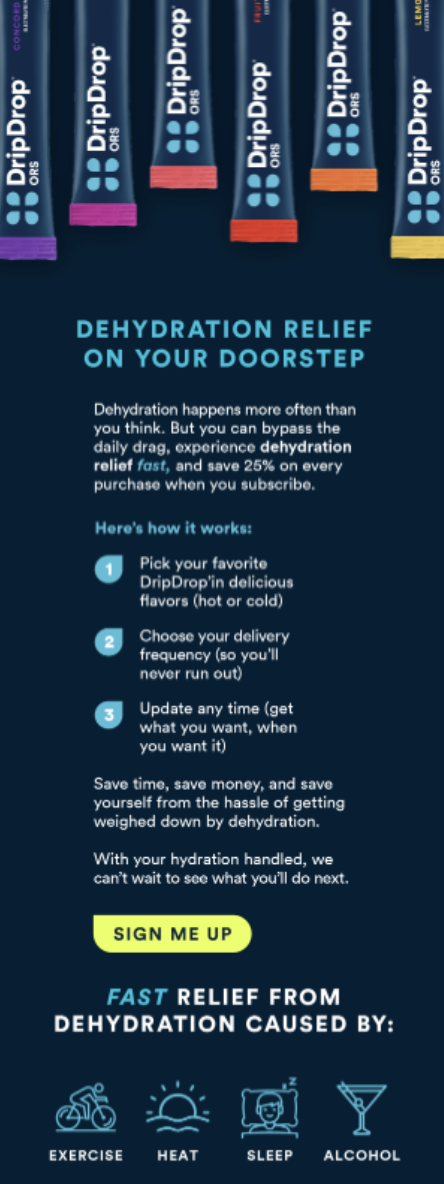
Problem-first subscription education
Bundle Relaunch & Value Framing
Lifecycle Stage: Consideration → Conversion
Goal: Drive bundle adoption and increase cart value without relying on flash sales.
Problem
Bundles historically underperformed because:
They felt promotional, not strategic
Customization wasn’t clearly communicated
Savings competed with urgency-based campaigns
Strategy
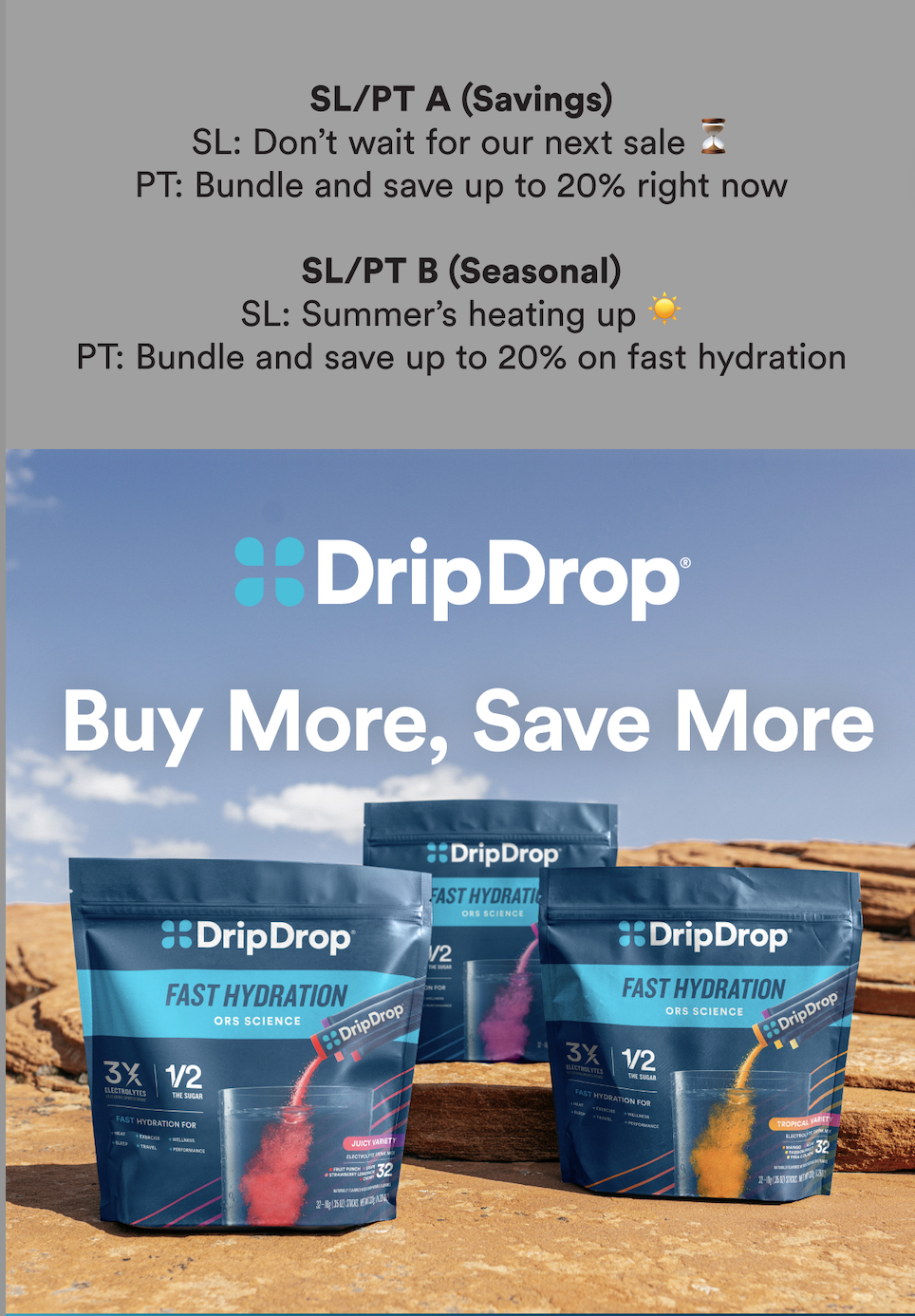
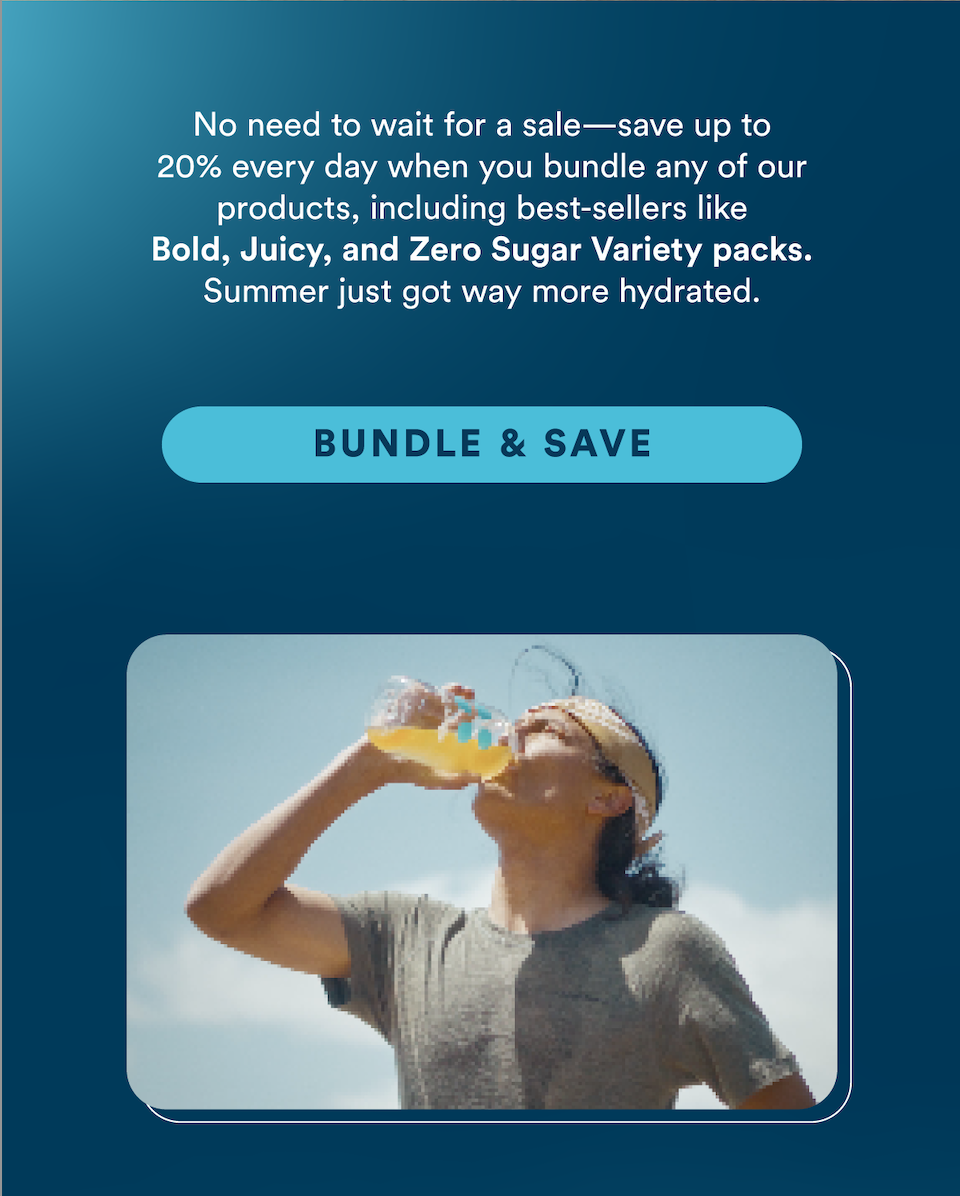
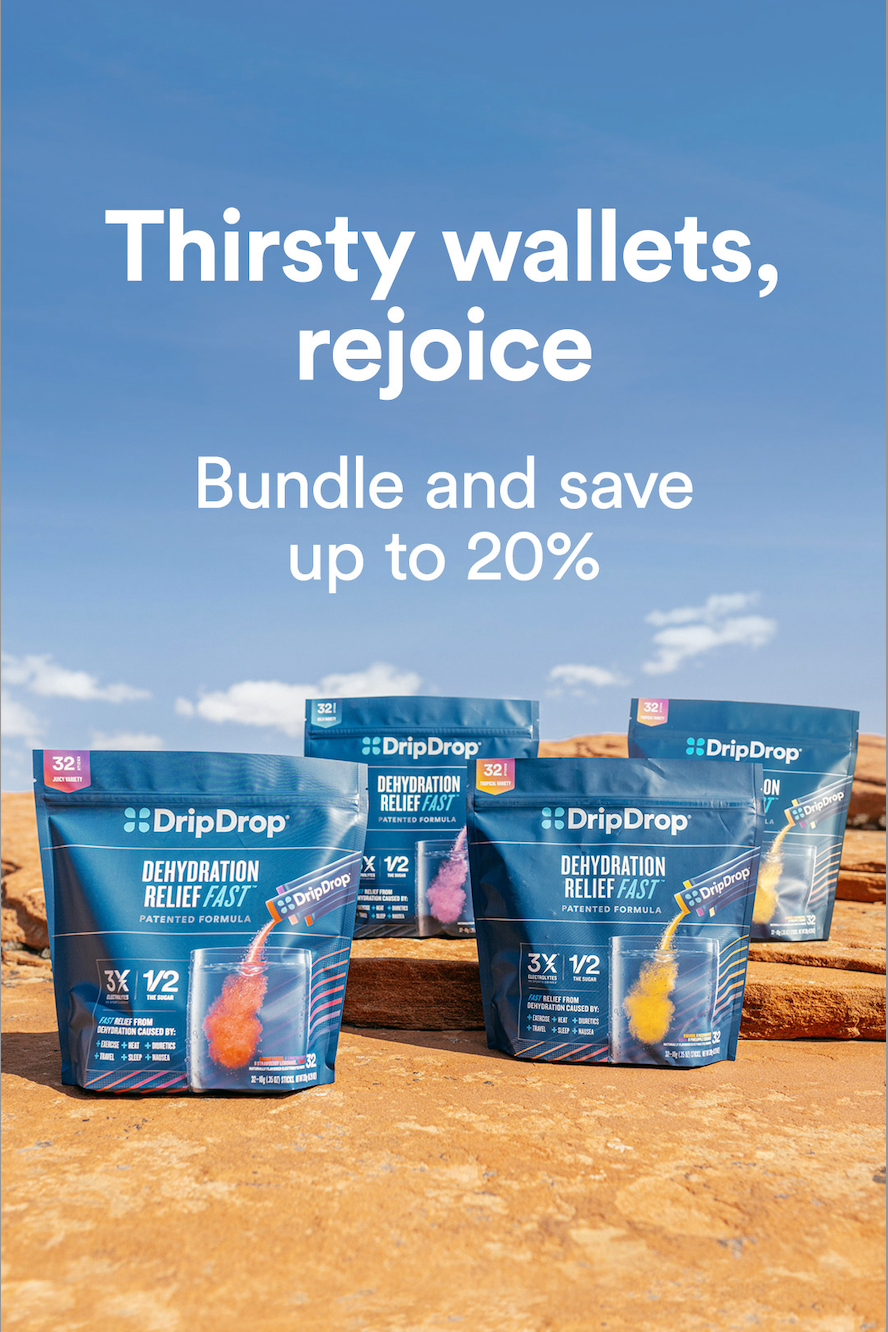
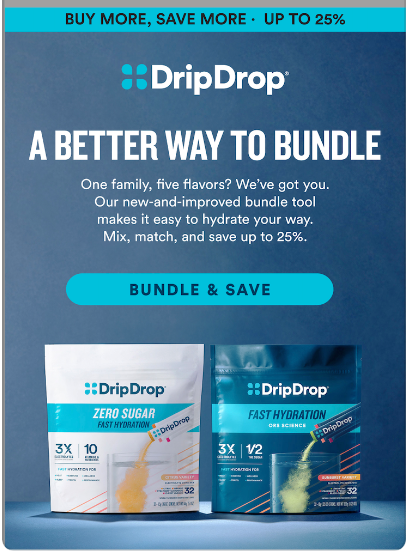
Reposition bundles as everyday value, not sale events
Introduce customization empowerment: “Hydration your way”
A/B test savings-based framing vs seasonal urgency
Support relaunch with subject line testing + landing page alignment
Abandoned Checkout Flow
Lifecycle Stage: Conversion Recovery
Goal:
Recover revenue without creating discount dependency.
Structure:
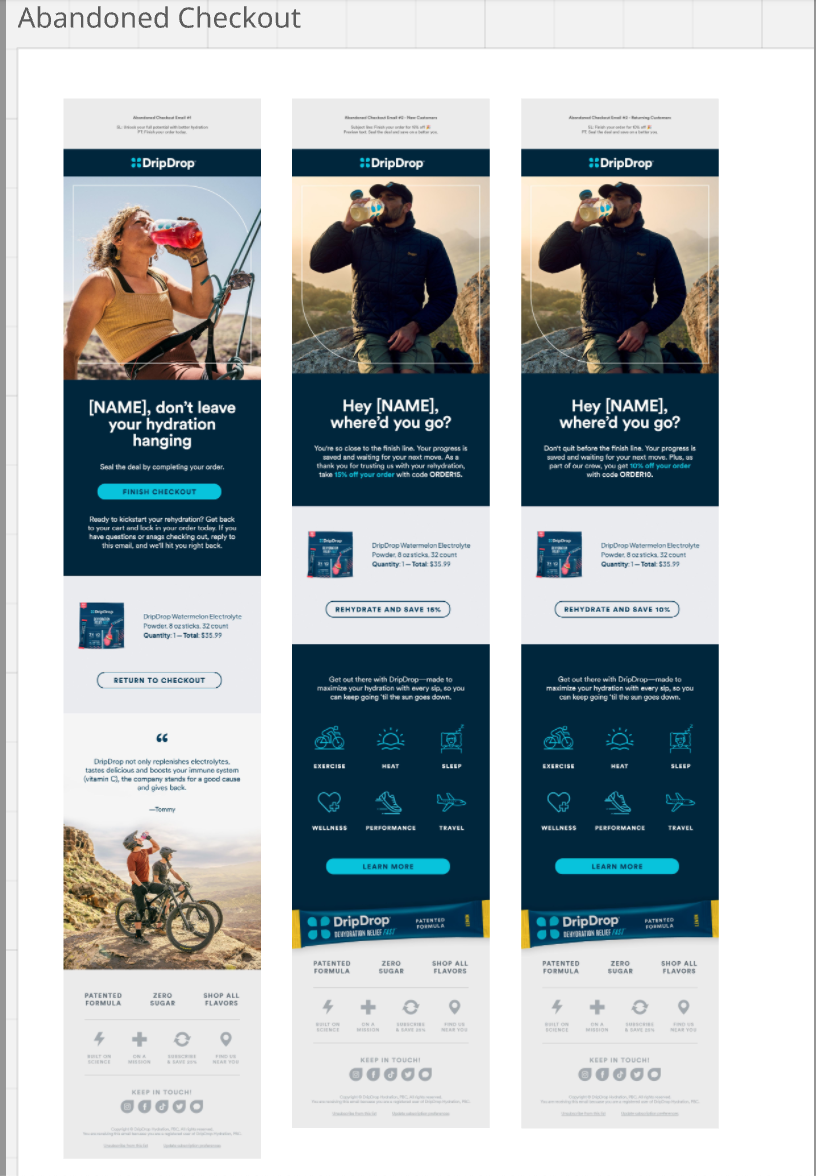
2-step recovery sequence with audience segmentation.
Email 1: Gentle reminder (assume distraction, not resistance)
Email 2: Follow-up with tailored messaging
New customers: Incentivized re-entry
Returning customers: Value reinforcement without heavy discounting
(Reminder + segmented follow-up shown below.)
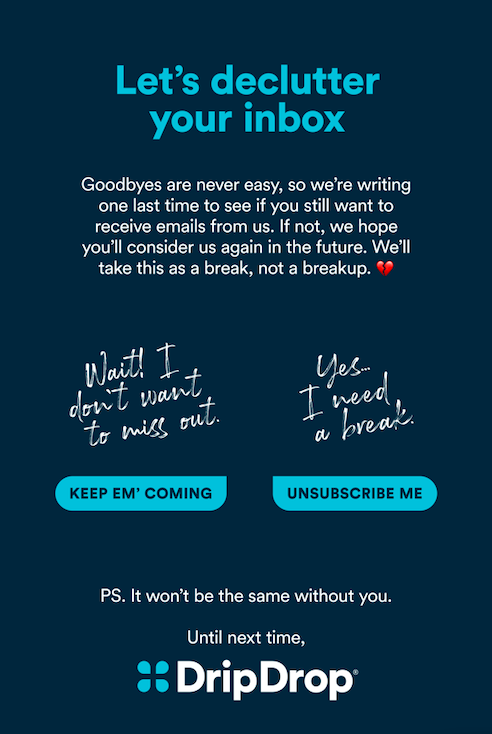
Unsubscribe Intervention
Lifecycle Stage: Churn Risk
Goal:
Reduce list attrition without eroding brand equity or defaulting to last-minute discounts.
Strategy:
Lead with empathy (“Let’s declutter your inbox”)
Offer autonomy instead of urgency
Preserve brand tone under friction
Reinforce value without escalating incentives
Demonstrates:
Churn management with restraint and long-term value protection.
Lifecycle System Impact
Designed a sequenced lifecycle framework spanning onboarding, value expansion, conversion recovery, and churn intervention.
Increased AOV through bundle and subscription framing
Reduced discount dependency across recovery flows
Reinforced mission and efficacy at key decision moments
Protected brand equity under high-friction churn points
Positioned lifecycle content as a revenue lever, not a promotional afterthought.
Headlines
Conversion-focused headline systems built to clarify value, reduce friction, and increase on-page momentum.
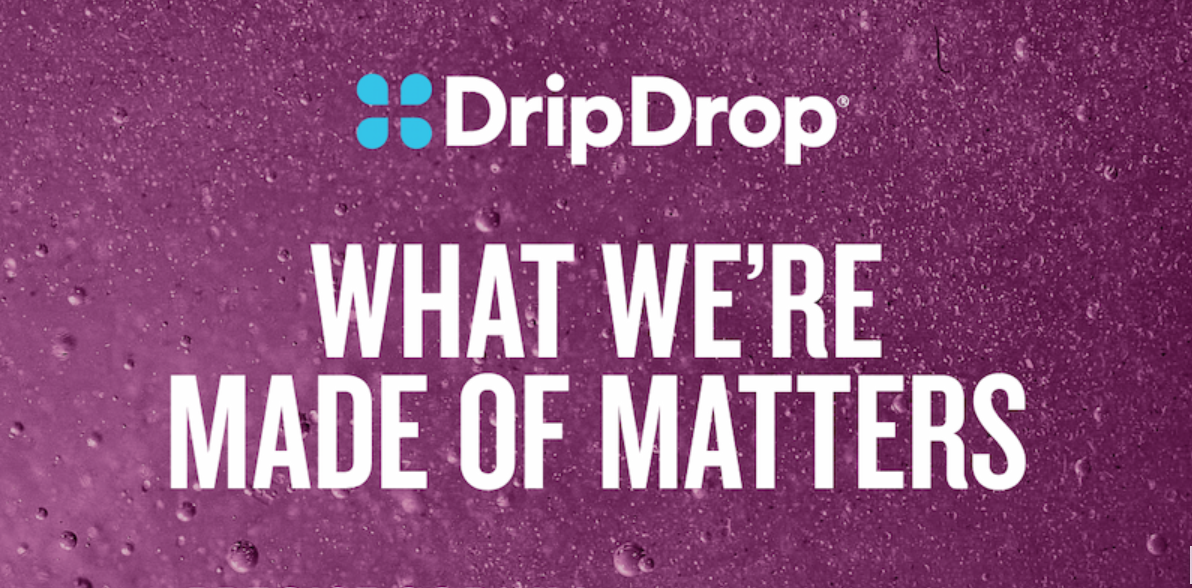
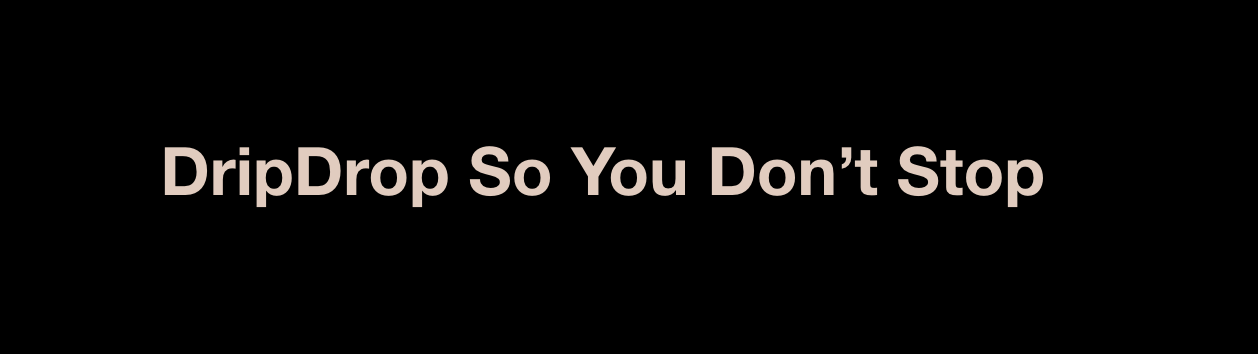
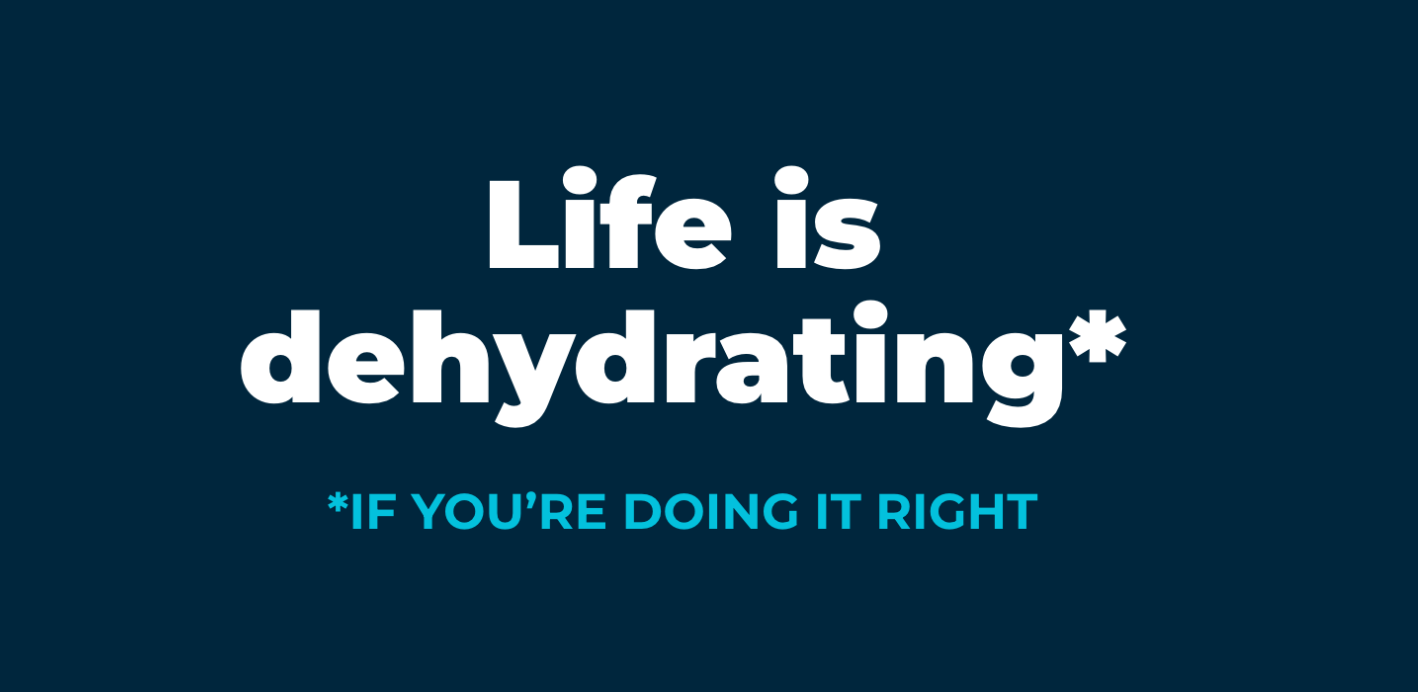
Brand Platforms & Enduring Ideas
Foundational brand headlines built to scale across channels, products, and moments without losing clarity or voice.



Codifying Differentiated Proof Points
These messages evolved beyond campaign copy and became repeatable proof points deployed across the ecosystem—from consideration through retention.
Rather than serving as introductory claims, they functioned as differentiated positioning anchors designed to reinforce why the product was meaningfully distinct.
This approach:
Clarified and standardized the core proof points that set the product apart
Reinforced differentiation consistently across paid, lifecycle, and product environments
Built recognition through repetition rather than reinvention
Strengthened mid- and lower-funnel conviction through clear, durable claims
By codifying these ideas into a structured messaging framework, we created a consistent positioning system that supported both conversion and long-term brand equity.
Seasonal Headlines
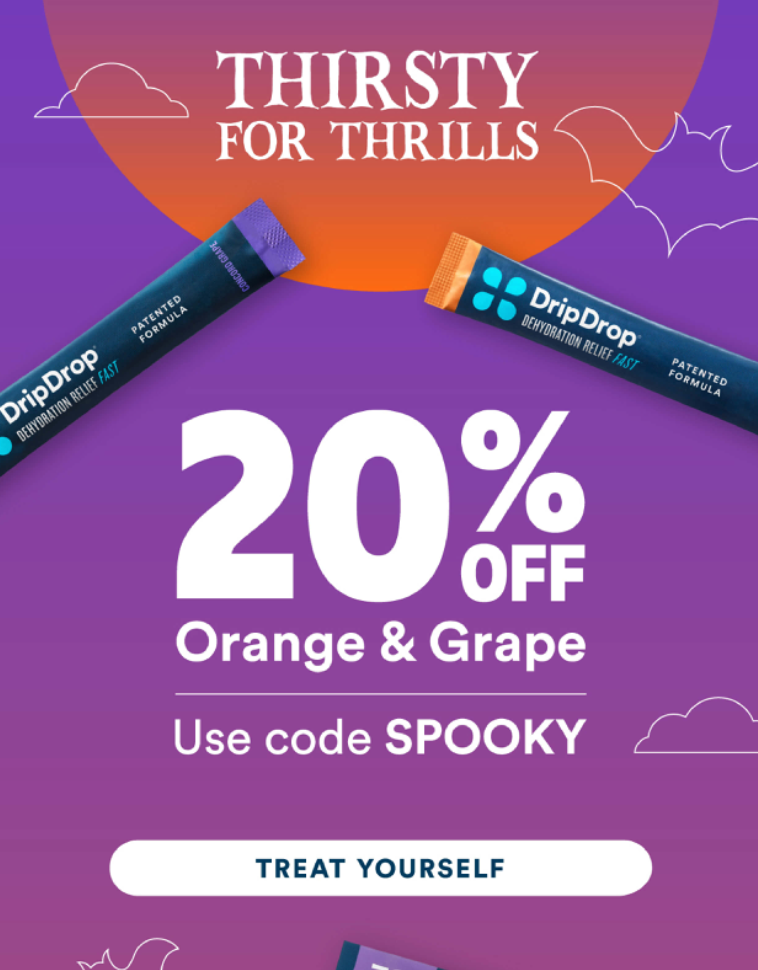
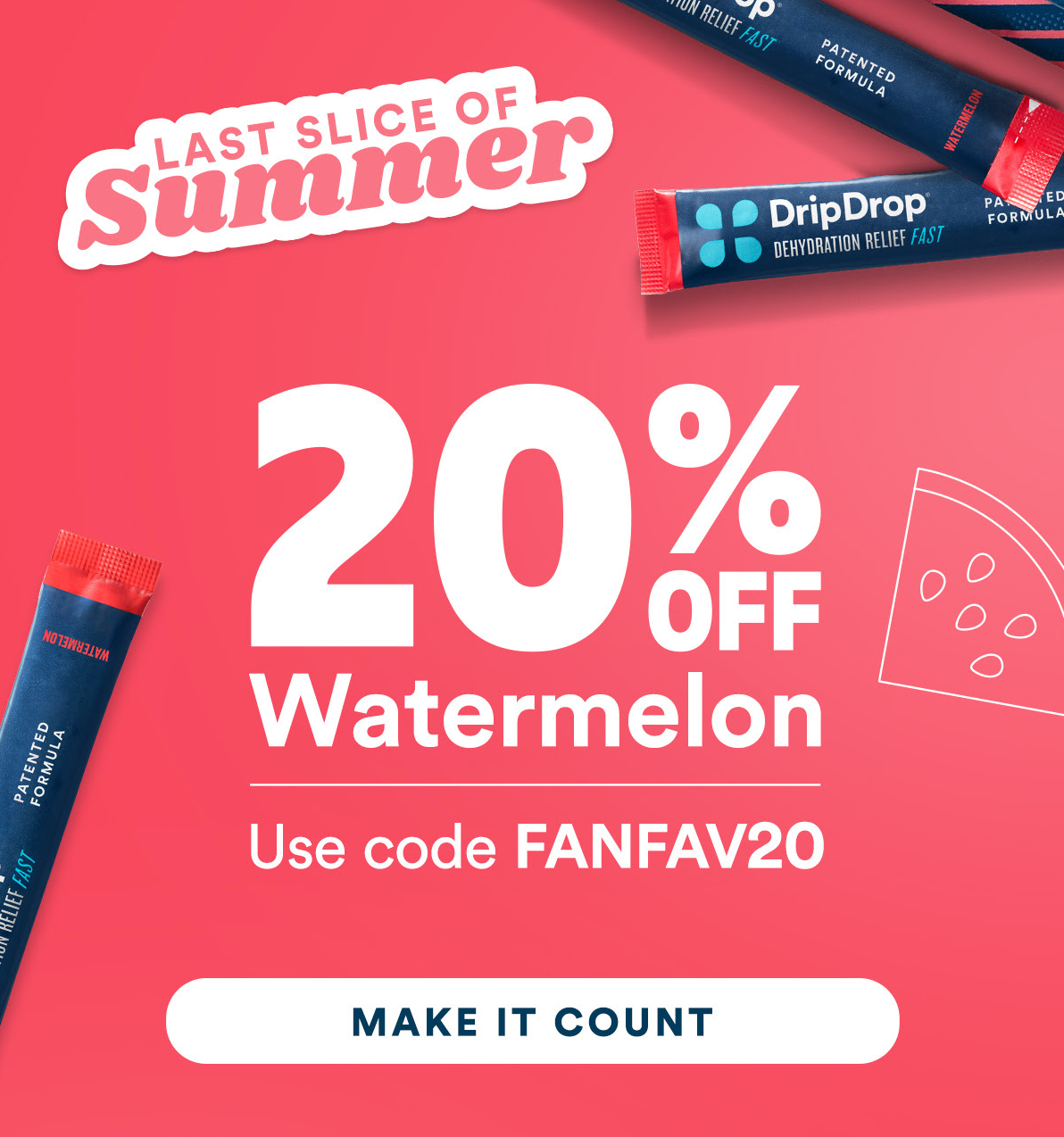
Promo headlines designed to feel timely and unique despite being templated.

Seasonal & Promotional Naming Framework
Rather than defaulting solely to generic language, I developed a repeatable naming device that differentiated each promotional moment, even when the underlying offer remained the same.
This approach:
Anchored recurring discounts in a distinct seasonal or contextual frame
Reduced promotion fatigue by giving each campaign its own identity
Preserved brand voice while maintaining pricing clarity
Reinforced the hydration benefit instead of centering the discount
Built a recognizable system that could scale across seasonal and non-seasonal campaigns.

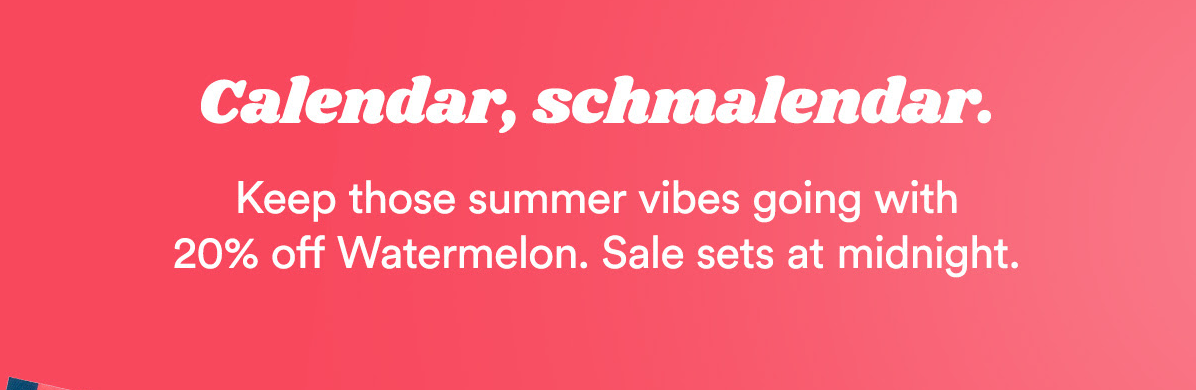
Seasonal Messaging Within Retention
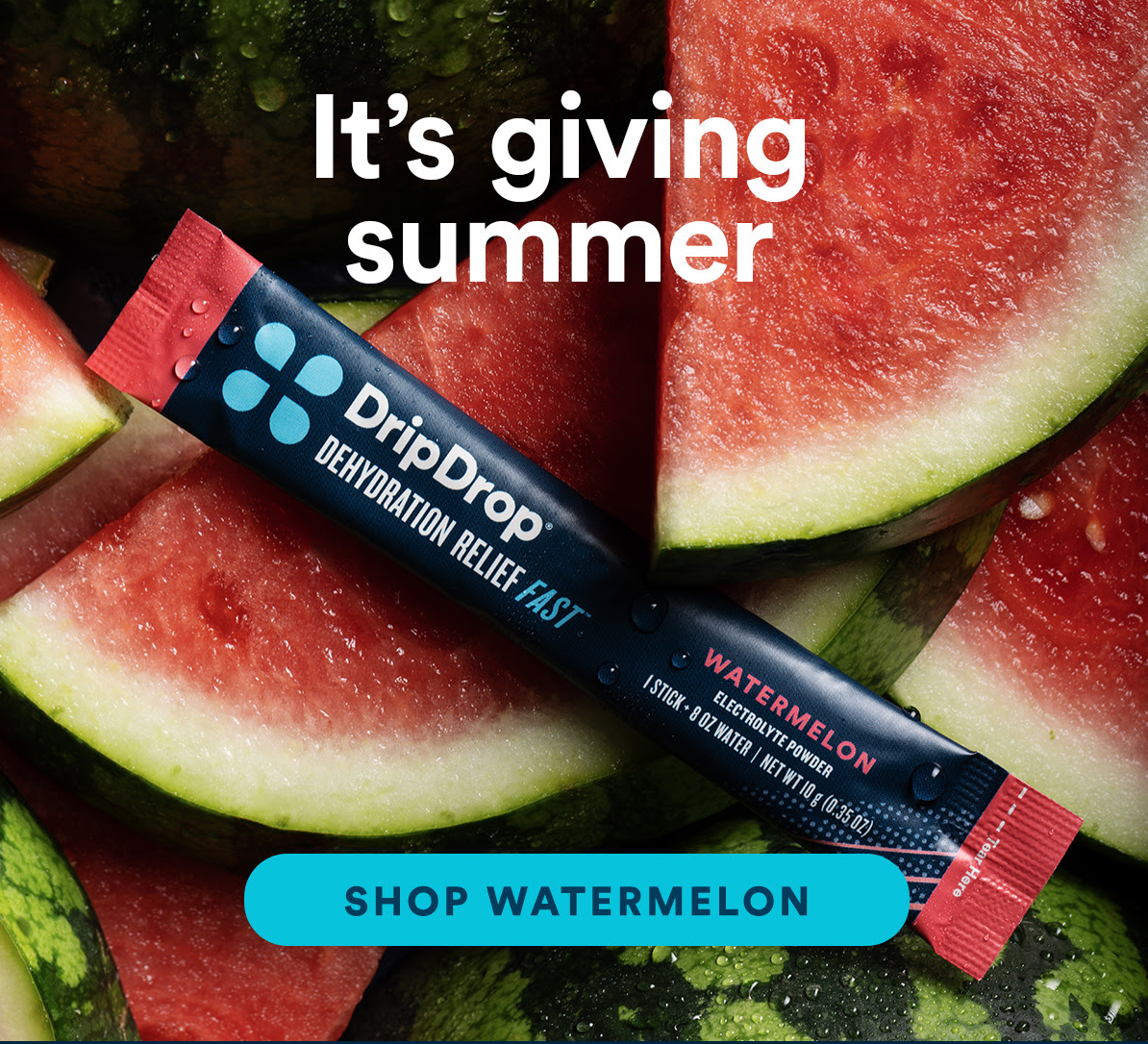
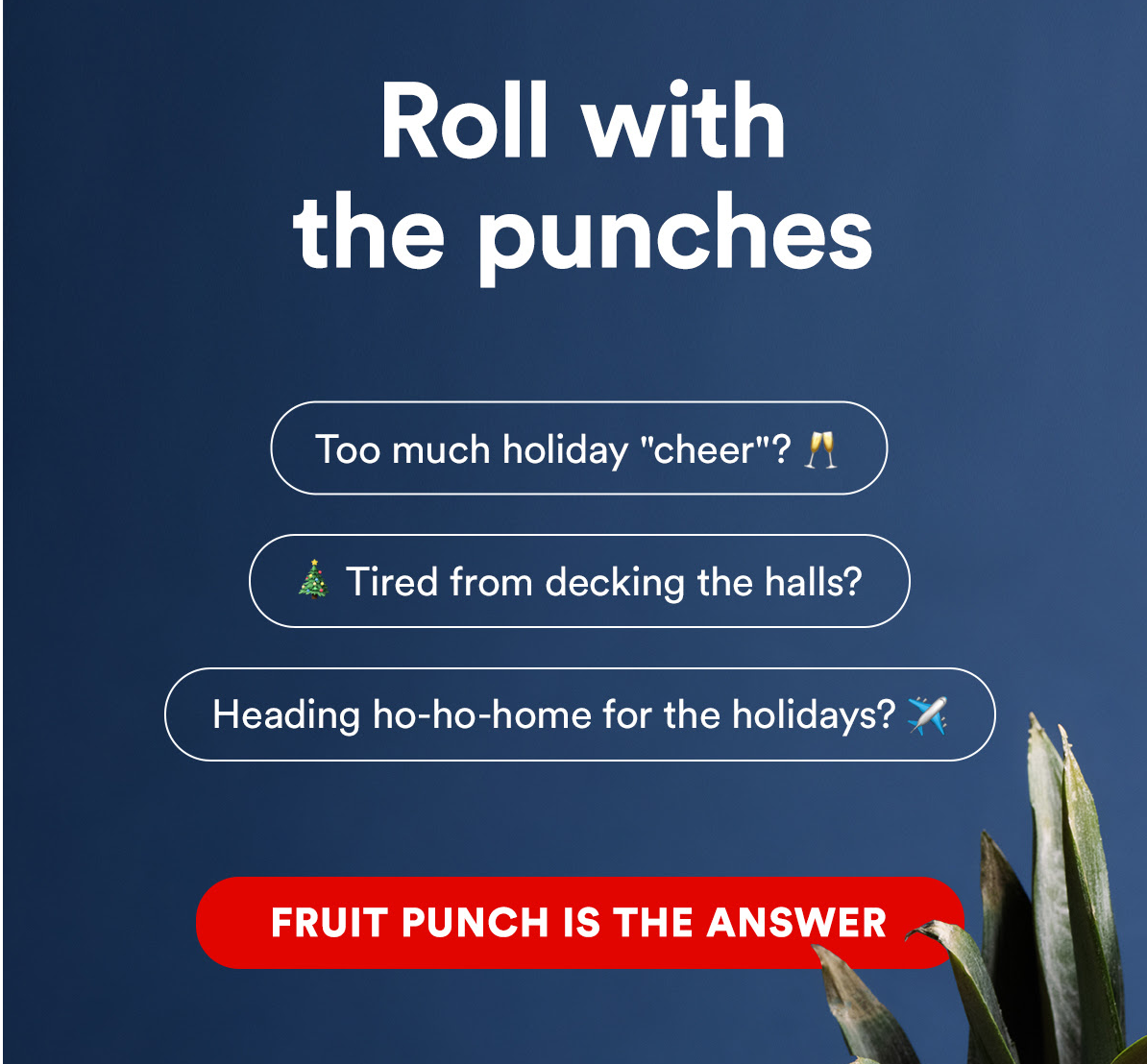
These seasonal headlines were designed for existing customers, reinforcing hydration as a timely and habitual part of their routines.
Rather than defaulting to generic updates, this approach:
Re-anchored hydration to shifting seasonal behaviors and energy cycles
Refreshed relevance between purchase moments
Created new use-case entry points without changing the core product
Prevented message fatigue in high-frequency lifecycle sends
Sustained engagement among repeat customers
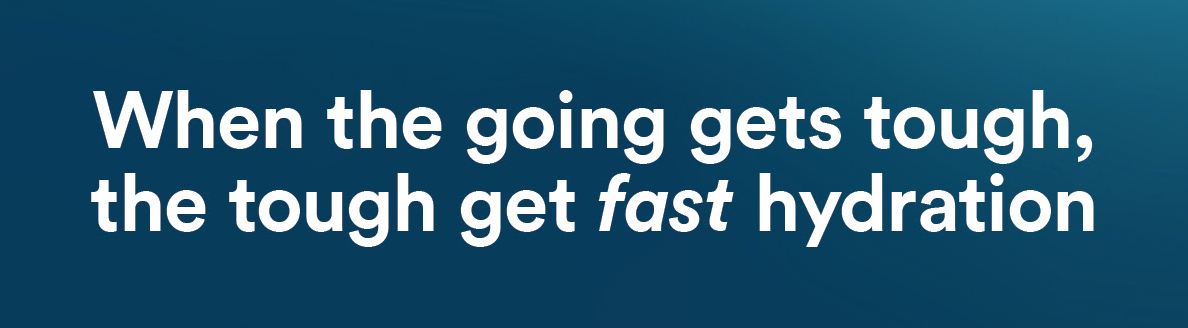
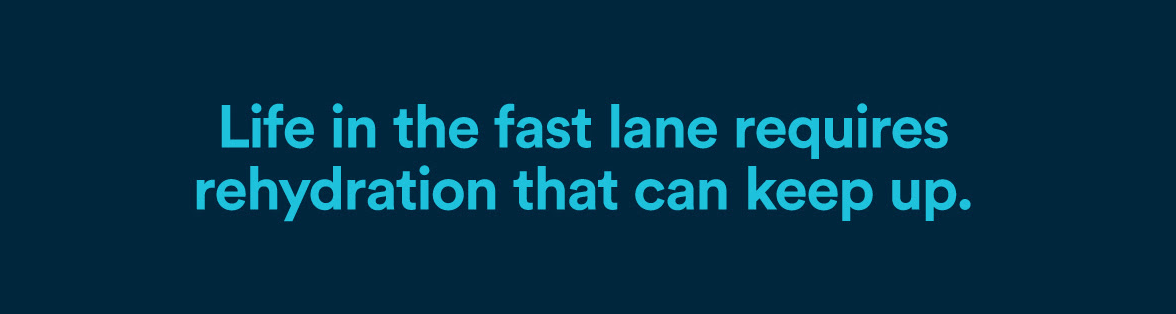
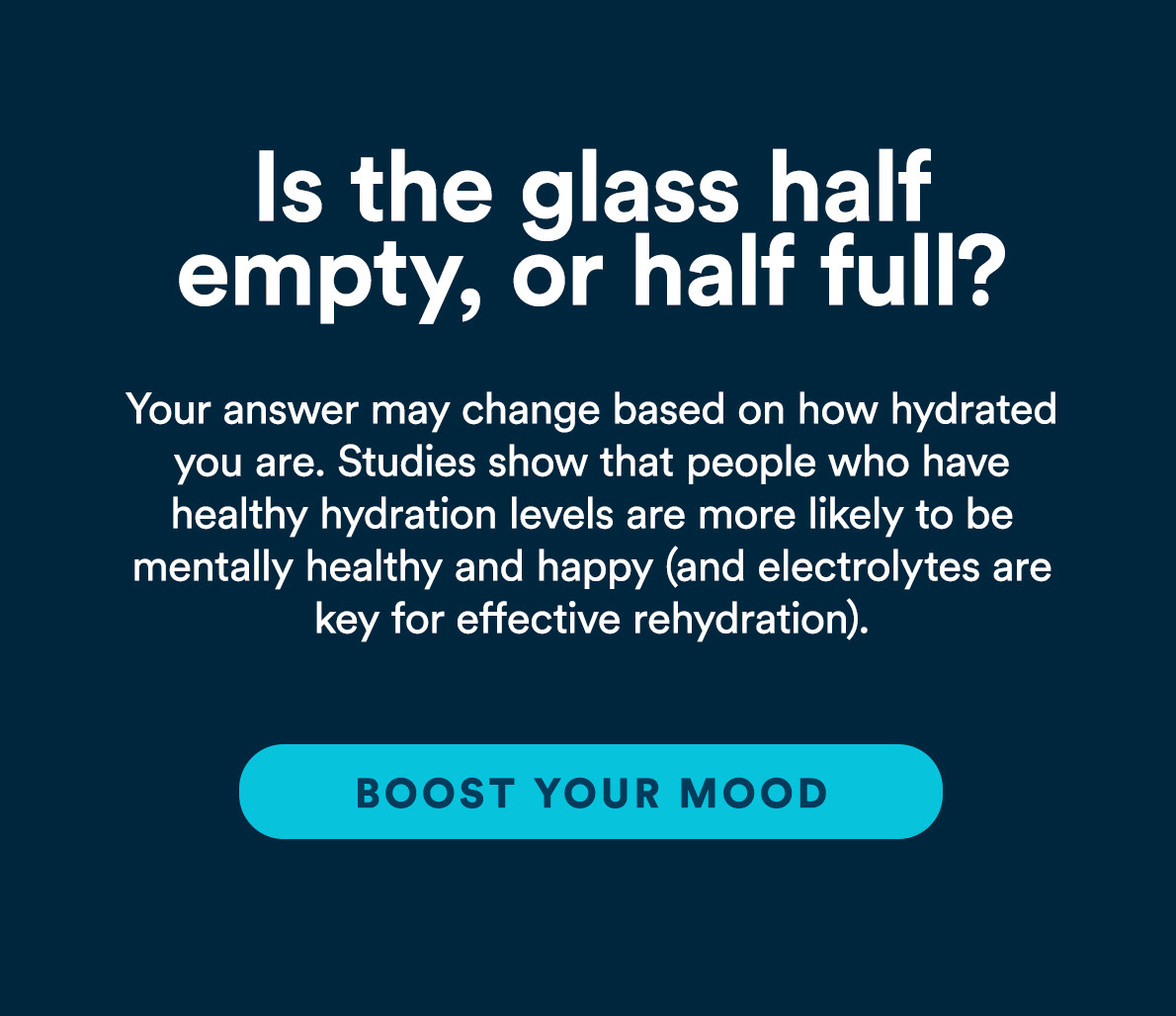
Mindset Shifters
These headlines are disruptors, made to change how someone thinks about hydration.

Shifting Category Perception
Hydration is often treated as reactive or routine. These headlines were designed to interrupt default assumptions and reframe the problem.
Rather than repeating functional claims, this approach:
Challenged common misconceptions about hydration
Created productive tension that prompted reconsideration
Positioned speed and performance as the real differentiators
Moved messaging from reactive relief to proactive optimization
These “mindset shifters” helped expand the conversation beyond symptoms and reposition hydration as a performance advantage.
Product Extension | Zero Sugar
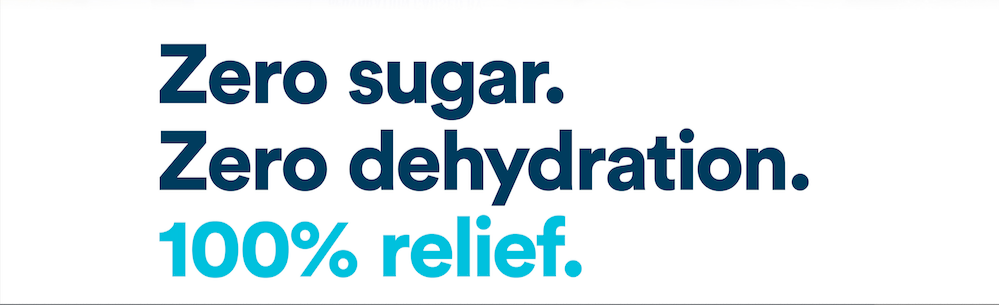
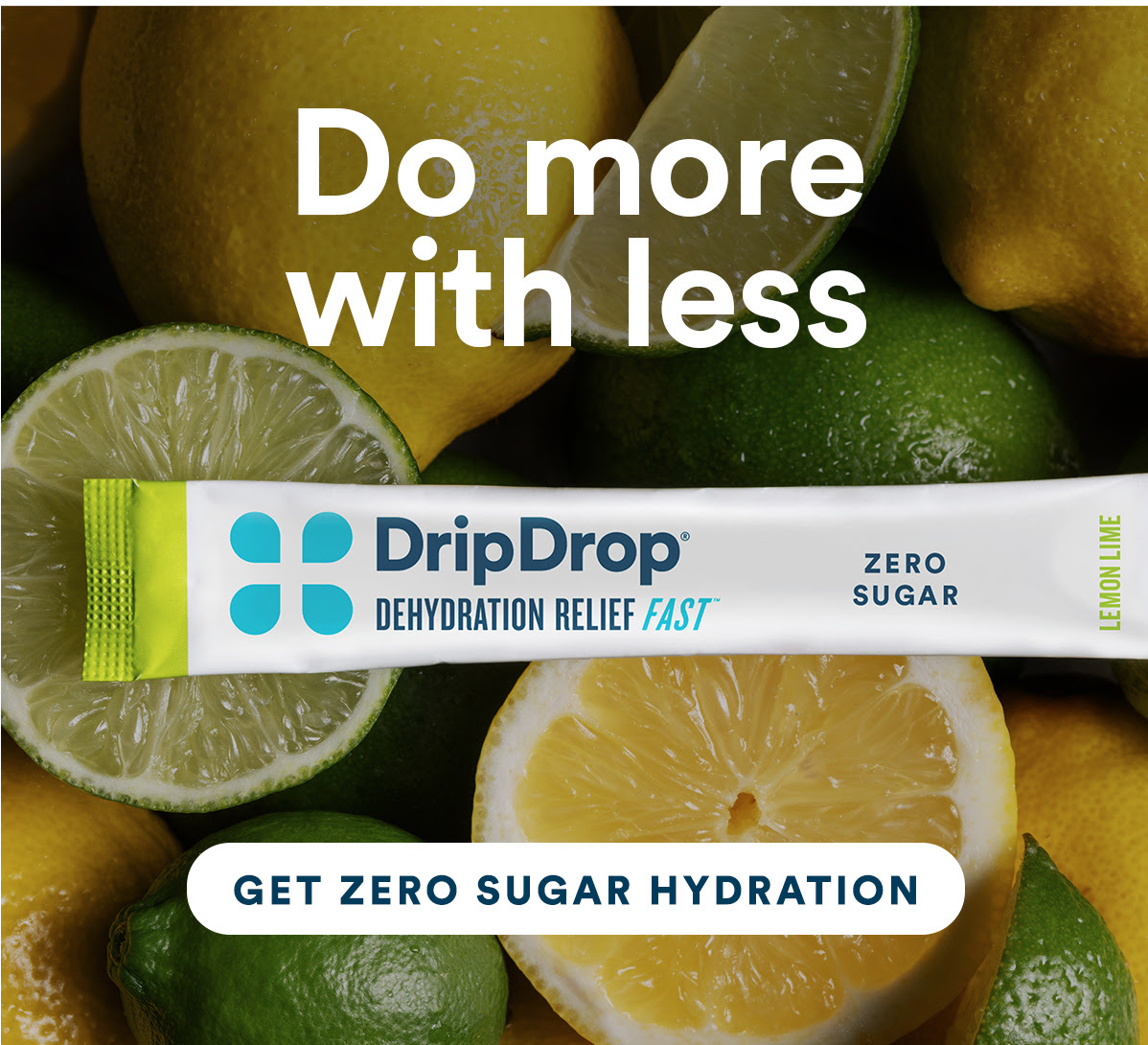
These headlines set a clear, lasting message framework built to scale with the product.
Differentiation That Drove Growth
Zero Sugar became a top-performing SKU, driven by clear, differentiated messaging that made the value proposition unmistakable.
This positioning worked because it:
Named the core differentiation immediately: no sugar, full hydration
Paired functional clarity with confident, declarative structure
Reduced cognitive load in paid and product environments
Gave the SKU a repeatable, scalable message platform
After early performance validated the framework, we carried this language forward across paid, lifecycle, and product marketing. What began as launch messaging became the long-term foundation for how Zero was expressed.
Transactional Headlines
Designed for moments of decision, these headlines turn utility into persuasion with brand expression.

Transactional Headlines
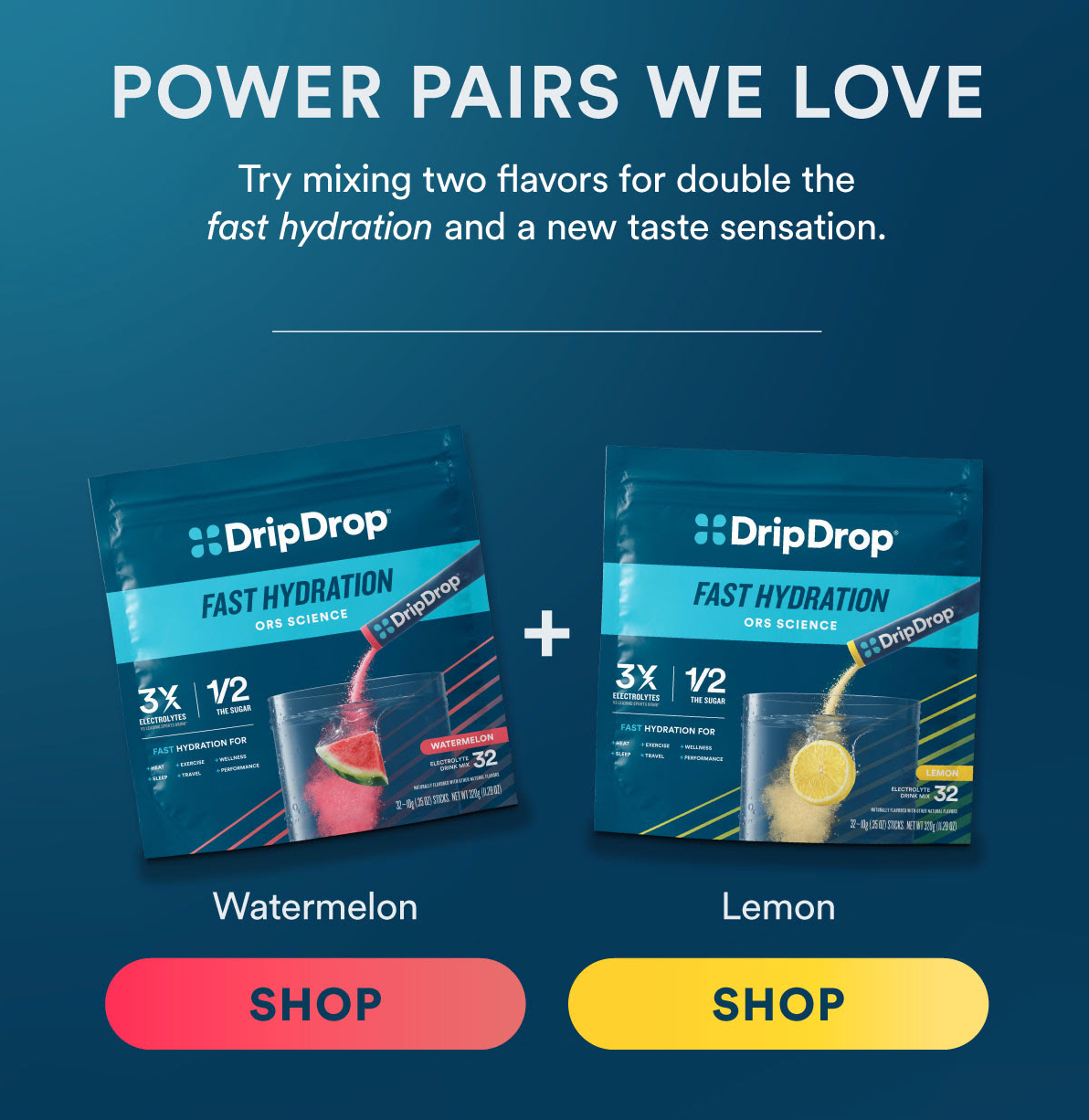
Transactional emails are typically functional and easy to overlook. Rather than defaulting to sterile system language, I used headline space to introduce human, brand-consistent moments without sacrificing clarity.
These headlines:
Preserved operational clarity while adding warmth
Reinforced trust across high-frequency touchpoints
Elevated routine confirmations into brand-consistent moments
Maintained usability without a generic system language
After these emails performed well, we evolved our approach to treat transactional touchpoints as intentional brand moments rather than purely functional exchanges, integrating tone and clarity into every stage of the customer journey.
Campaign Email Subheaders
Email-led campaign callouts built to guide action, maintain visual consistency, and reinforce brand voice in high-volume sends.
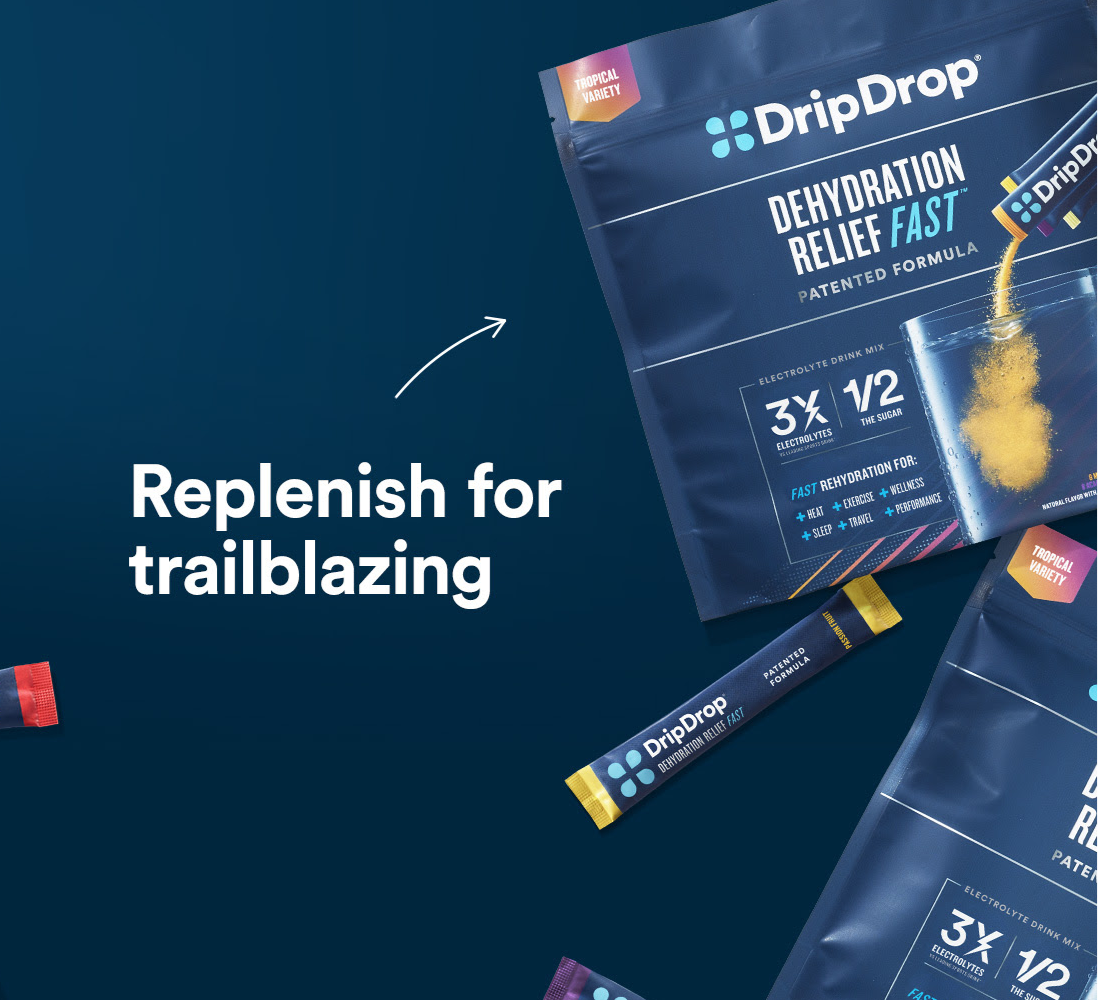
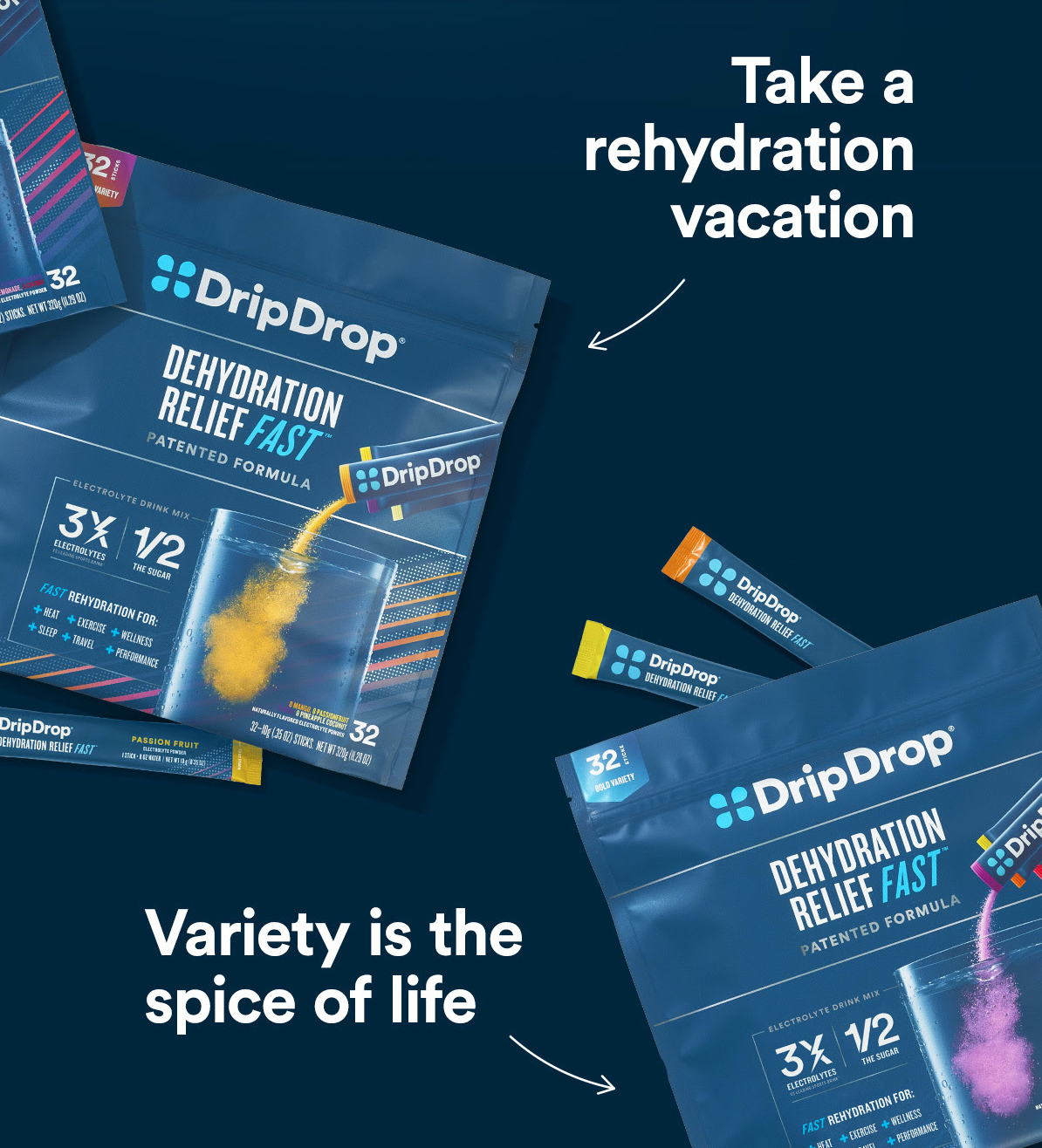
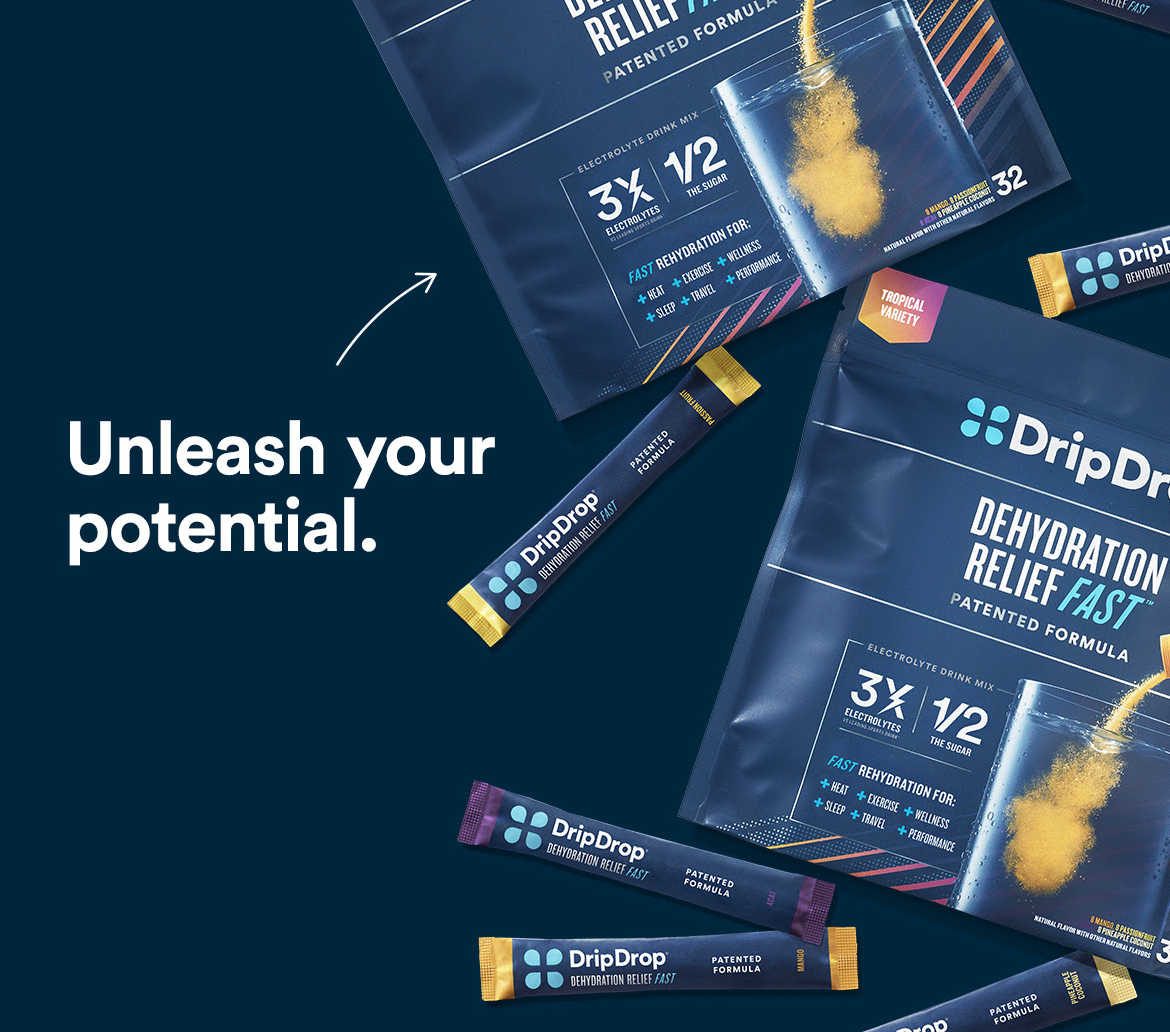
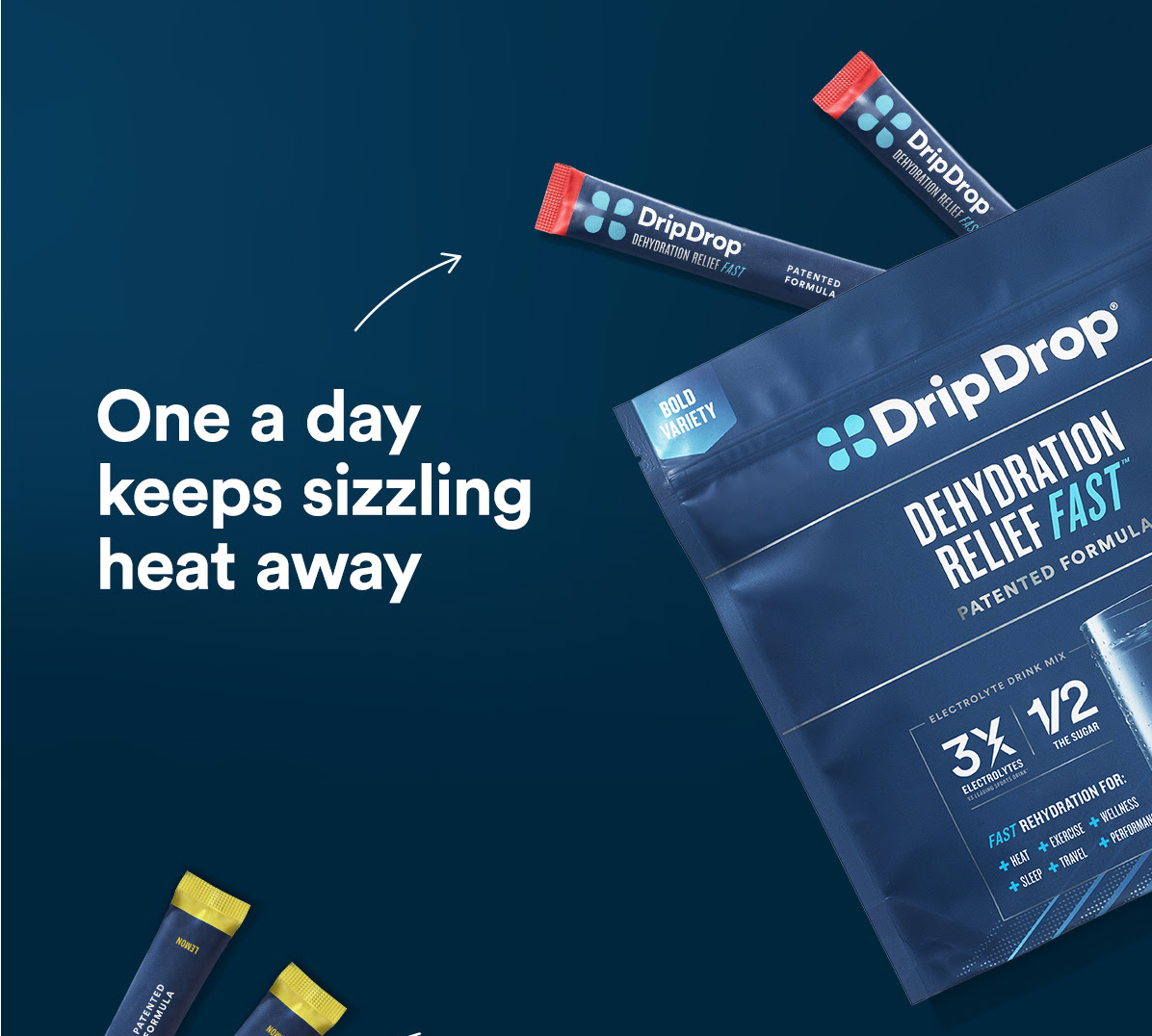
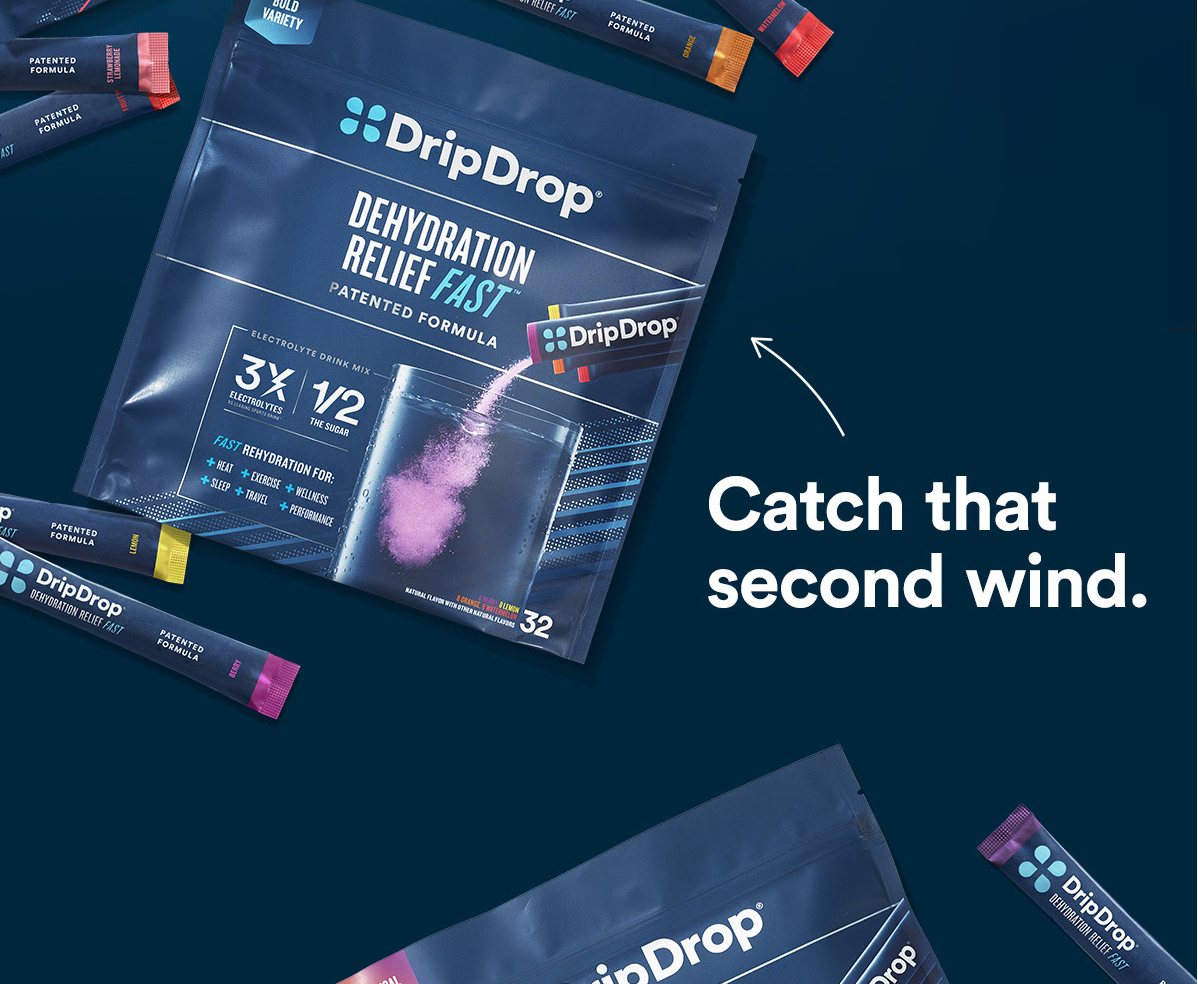
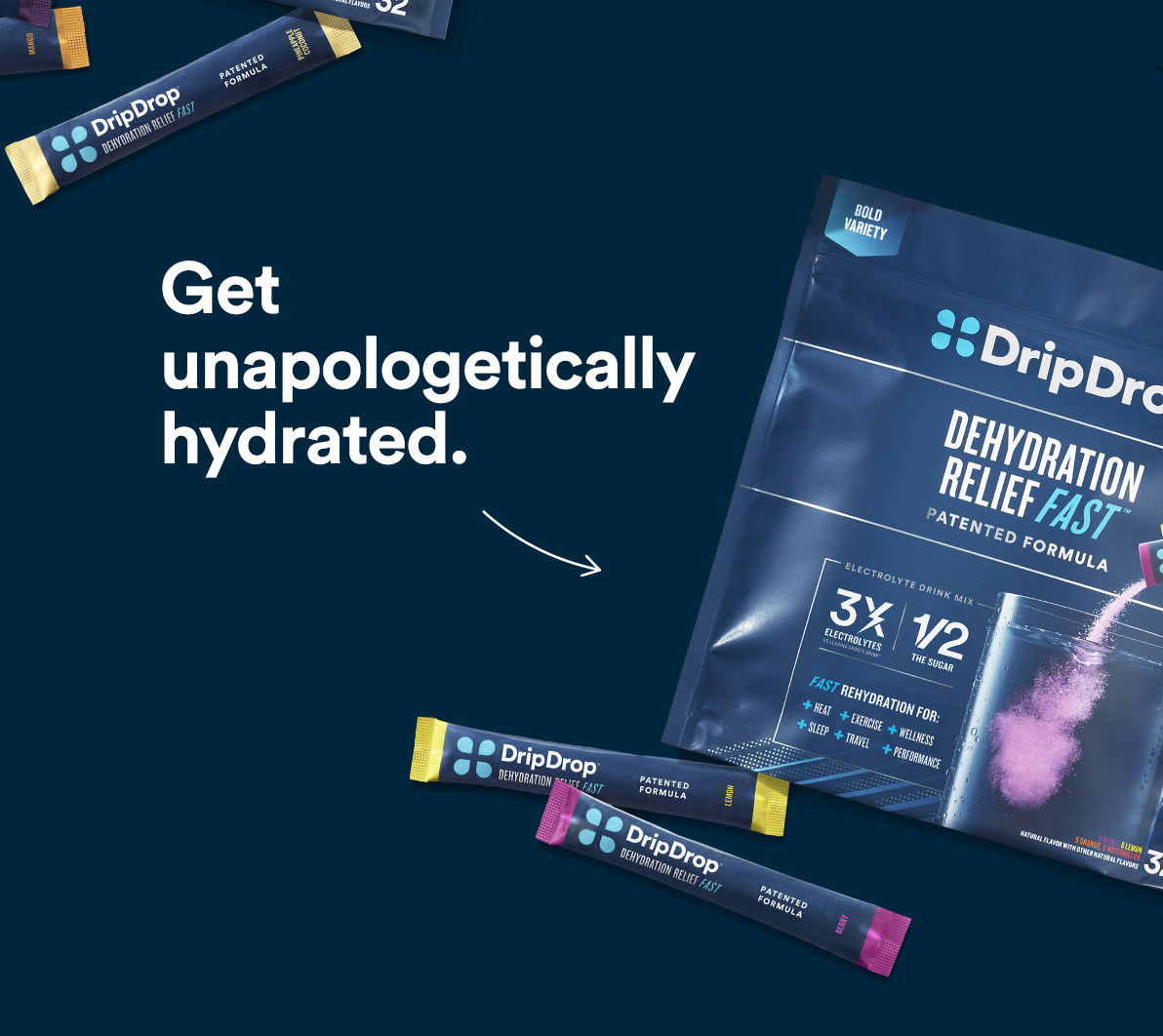
Modular Subhead System Across Campaign Emails
Rather than writing one-off campaign headers, I developed a repeatable subhead system designed to flex across product pushes, seasonal moments, and lifecycle sends.
These short-form callouts were built to:
Reinforce the hydration benefit in varied language without feeling repetitive
Anchor each email in a clear use case or outcome
Maintain brand voice across changing campaign contexts
Create visual and verbal consistency in high-volume sends
The result was a structured framework for messaging; one that protected brand consistency, clarified the desired action, and turned testing into a pattern-driven optimization process rather than isolated variation.
Behavioral testing framework designed to improve open rates, align expectation with experience, and drive qualified traffic.
Subject Lines
Subject Lines that earn the click.
-
Ready for good news that matters?
-
Muscle cramps? Meet your match 💪
-
What’s hydration’s biggest “thirst trap”?
-
Bye, bye brain fog 👋
-
Don’t be this guy 🥵
-
Fast hydration has a formula 🔬
-
Sunburst is stealing the spotlight… ☀️
-
Feeling sluggish? Let’s fix that ⚡
-
The hydration hack athletes swear by 💧
-
Most people think they’re hydrated.
Most people are wrong.
-
Blink, and it’s gone.
Last chance for 20% off
-
You don’t need a “new you”
Get faster hydration
A/B Testing & Signal Extraction
These subject lines emerged as top performers across A/B tests in lifecycle and promotional campaigns.
Rather than optimizing for novelty alone, we tracked patterns across open rate lifts and downstream engagement. Three signals repeated:
Clear problem/solution framing outperformed vague benefit language
(“Muscle cramps?” vs. generic wellness claims)Specific functional benefits beat abstract brand messaging
(“Fast hydration has a formula” vs. softer lifestyle lines)Curiosity worked best when anchored in relevance
(“What’s hydration’s biggest ‘thirst trap’?” paired intrigue with a clear category hook)
As a result, we shifted the ongoing subject line strategy toward:
Earlier problem identification
Explicit functional claims
Tighter, benefit-led phrasing
Curiosity grounded in product truth
This approach improved open consistency while preserving brand voice.
Action architecture designed to reduce hesitation, reinforce intent, and increase click-through without artificial urgency.
CTAs
CTAs That Convert Without Shouting
CTAs designed to move people to action while protecting brand voice across ecommerce, lifecycle, and campaign moments.
Momentum & Action



Brand-Led Conversion


Contextual & Seasonal Moments



Testing Conversion Language Beyond “Shop Now”
Rather than defaulting to generic ecommerce CTAs, we tested language that carried brand voice while still driving action.
These top-performing CTAs revealed distinct performance patterns:
Action framed as outcome outperformed action framed as transaction.
(“Get Refreshed” vs. “Buy Now”)Benefit-led language sustained stronger engagement than product-led prompts.
(“Unlock Optimal Performance” vs. “View Product”)Urgency increased click-through without feeling aggressive.
(“Don’t Wait, Hydrate”)Aspirational phrasing worked when tied to identity or momentum.
(“Make It Count”)
From there, we developed a modular CTA system — pairing momentum-based language with functional clarity — allowing us to adapt tone across ecommerce, lifecycle, and campaign moments without sacrificing performance.
Conversion as Infrastructure
Conversion performance improved not because of isolated campaigns, but because the system was aligned end-to-end.
Lifecycle flows built trust and behavioral momentum.
Headlines, subject lines, and CTAs reinforced clarity at every decision point.
Bundles and subscriptions increased AOV without training customers to wait for sales.
Recovery flows protected revenue without eroding brand equity.
The result was a scalable conversion framework that balanced performance, brand voice, and long-term value creation.